
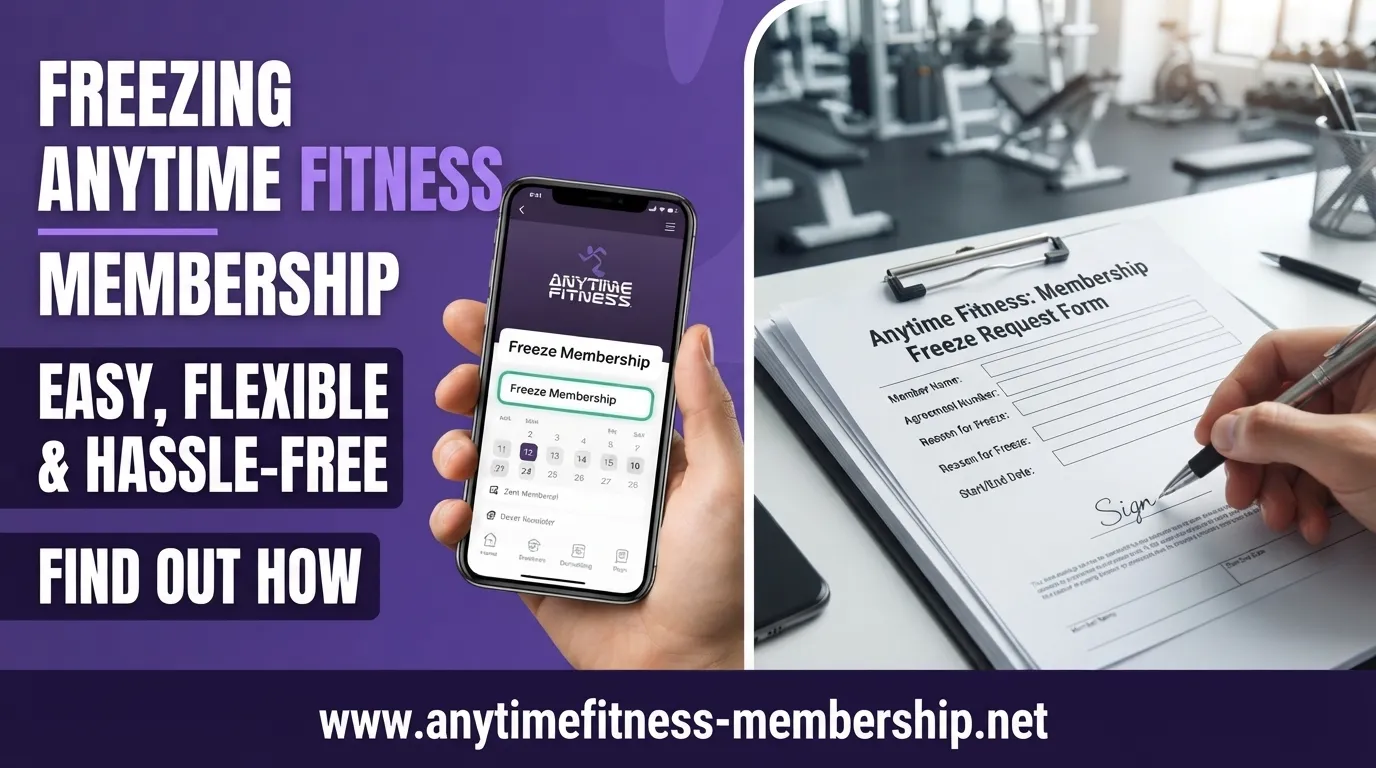
Freezing Anytime Fitness Membership: What You Need to Know
Freezing Anytime Fitness Membership can be a practical option when you need a temporary break without permanently ending your membership. You might need time away because of travel, exams, an injury, medical recovery, pregnancy, a job change, financial pressure, or a temporary relocation.
The important point is that Anytime Fitness clubs are independently operated, so freeze rules can differ from one home club to another. The fee, notice period, maximum freeze length, documentation, and effect on your contract should therefore be confirmed with your home club before you submit a request.
A freeze normally puts your membership on hold for an agreed period. It does not mean that your membership has been canceled.
What Does Freezing an Anytime Fitness Membership Mean?
A membership freeze is a temporary pause in your membership rather than a permanent cancellation.
During an approved freeze, your gym access may be suspended and your normal membership payments may be reduced, paused, or replaced by a freeze fee, depending on your membership agreement.
When the approved period ends, your account will generally become active again. Your normal billing can resume, and your 24/7 gym access and door fob may become available again.
Because policies are set at the club level, do not assume that every Anytime Fitness location uses the same freeze rules.
How Long Can You Freeze Anytime Fitness?
There is no single freeze duration that applies to every membership.
The examples found across available membership guidance suggest that some clubs may allow a minimum freeze of around 1 month, while others may consider shorter periods such as 1 week. Maximum periods can also differ considerably.
A commonly reported range is about 1–6 months, while some membership arrangements may allow only 1–3 months.
Some clubs may also limit how often you can freeze an account. For example, a member might be allowed 1 or 2 freezes in a year, while another club could use different restrictions.
The exact answer depends on your membership agreement and home club.
How Much Does an Anytime Fitness Freeze Cost?
A freeze does not necessarily mean that you pay nothing.
A commonly reported freeze-fee range is about $5–$15 per month. This is substantially lower than the example of approximately $40–$60 per month sometimes used for regular membership dues.
However, these figures should be treated as examples rather than fixed Anytime Fitness prices. Your club may charge a different amount, waive the fee in certain circumstances, or apply other charges.
Before freezing your account, ask the club:
- What is the monthly freeze fee?
- Will any administrative fee apply?
- Will I have to pay prorated membership dues?
- Is there a reactivation fee?
- Will my regular billing stop completely?
- When will normal billing restart?
Getting these details in writing can prevent unexpected charges later.
Can You Freeze Anytime Fitness for Medical Reasons?
A medical situation may qualify for a freeze, depending on your membership terms and club policy.
Medical circumstances can include an injury, surgery, hospital stay, recovery period, or another situation that temporarily prevents you from exercising.
The club may ask for supporting documentation. Examples can include a doctor’s note, hospital discharge paperwork, a surgery schedule, or information about your expected recovery timeline.
In some cases, medical documentation may help you receive different freeze terms, such as a lower fee or a longer hold period. This is not guaranteed, so ask your home club what documentation it requires before submitting your request.
How to Freeze Your Anytime Fitness Membership
The process can be straightforward, but the exact procedure depends on your home club.
1. Review your membership agreement
Start by checking your Membership Agreement for information about freezes, holds, minimum terms, fees, notice requirements, and contract extensions.
Look specifically for language about temporary suspension or membership holds.
2. Contact your home club
Your home club is usually the best place to start because it manages the terms of your membership.
You can ask whether the club accepts freeze requests:
- In person
- By phone
- By email
- Through a members portal
Some clubs may require you to complete paperwork in person even if the initial request can be made online or by email.
3. Ask about the freeze terms
Before agreeing to the freeze, confirm the most important details.
Ask how long you can freeze, how much it costs, whether there is a minimum period, whether notice is required, and whether the freeze changes your contract end date.
Also ask exactly what happens to your billing and gym access during the hold.
4. Complete the required request
Your club may ask you to complete a freeze request form.
You may need to provide information such as your name, account number, requested start date, requested end date, and reason for the freeze.
Medical or other supporting documentation may also be required.
5. Confirm the start and end dates
Make sure the dates are clear.
Do not rely only on a verbal conversation. Ask the club to confirm the approved freeze period by email or another written method.
6. Keep written confirmation
Save your confirmation, freeze form, email, or other documentation.
Written confirmation can be useful if your account is billed incorrectly or your membership becomes active earlier or later than expected.
Do You Still Get 24/7 Access During a Freeze?
Usually, a full membership freeze means your normal gym access is suspended for the approved period.
This can mean:
- Your 24/7 access stops.
- Your door fob or access card may be disabled.
- You cannot use the gym during the freeze.
- Access is restored when the membership becomes active again.
The exact access rules should be confirmed with your club because the freeze arrangement may differ between memberships.
If you need occasional access while away, ask whether a different membership option would be more suitable.
Does a Freeze Extend Your Contract?
It can.
This is one of the most important details to check before freezing.
Suppose you have 5 months remaining on a minimum-term contract and place the membership on hold for 2 months. If your agreement extends the commitment by the freeze period, you could effectively have 7 months remaining after accounting for the paused period.
In simple terms, a freeze may delay the end of your commitment rather than erase those months.
This is why a freeze should not automatically be considered a way to avoid remaining contract obligations.
Ask the club directly:
“Will my membership end date be extended by the length of my freeze?”
Freeze vs. Cancel: Which Option Is Better?
A freeze generally makes more sense when your situation is temporary and you expect to return to the gym.
For example, freezing may be useful if you are traveling for a few months, recovering from an injury, dealing with a temporary work situation, or temporarily unable to exercise.
Cancellation may make more sense if you no longer intend to use the gym.
Remember that a freeze is not a cancellation. A frozen membership can automatically become active again when the approved period ends, while a cancellation ends the membership according to the applicable cancellation terms.
What Happens When the Freeze Ends?
Your account may automatically return to active status when the approved freeze period expires.
At that point, several things can happen:
- Normal membership billing can restart.
- Your 24/7 access can return.
- Your door fob can become active again.
- Your contract can continue.
- Your regular membership terms can resume.
Do not assume that the club will contact you before billing resumes.
A useful approach is to place the freeze end date on your calendar and check your next billing statement.
One practical reminder is to check your account about 1 week before the freeze ends. This gives you time to contact the club if your plans have changed.
Can You Extend an Anytime Fitness Freeze?
Possibly, but it depends on your club and membership agreement.
If you originally requested a 1-month freeze but discover that you need more time, contact your home club before the original freeze expires.
Do not assume that an existing freeze will automatically continue.
Ask whether an extension is available, whether another request is required, and whether the additional period will change your contract end date.
Common Mistakes to Avoid
One of the biggest mistakes is assuming that all Anytime Fitness clubs have identical freeze policies.
Other common problems include waiting too long to request a freeze, failing to check the membership agreement, not confirming the freeze in writing, forgetting the end date, and assuming that freezing automatically cancels future billing.
Another mistake is overlooking the contract.
A lower monthly freeze fee can sound attractive, but if the freeze extends a minimum-term commitment, you should understand the long-term effect before accepting it.
What Should You Ask Your Home Club?
Before submitting your request, get clear answers to these questions:
- What is the minimum freeze period?
- What is the maximum freeze period?
- How many times can I freeze in a year?
- Is there a notice requirement?
- How much is the freeze fee?
- Will my regular dues stop?
- Will I still be billed any administrative amount?
- Is medical documentation required?
- Will my contract end date be extended?
- When will my 24/7 access stop?
- When will my access return?
- Will my membership reactivate automatically?
- What happens to billing when the freeze ends?
- Can I extend the freeze?
- Can I receive the terms in writing?
Having these answers before the freeze begins can make the process much easier.
How to Avoid Unexpected Charges
The safest approach is to treat the freeze as a formal change to your membership rather than simply telling the gym that you will not be attending.
Confirm the fee, dates, billing arrangements, access restrictions, and contract impact before the freeze starts.
Keep your written confirmation and check your bank statement after the freeze begins and again when it ends.
If a charge does not match the terms you were given, contact your home club promptly and provide your written confirmation.
Frequently Asked Questions
Can I freeze my Anytime Fitness membership?
Often, yes. However, the eligibility requirements and terms depend on your membership agreement and home club.
How much does it cost to freeze Anytime Fitness?
A commonly reported example is $5–$15 per month, but there is no universal freeze price for every club. Your location may charge a different amount or offer different terms.
How long can I freeze my Anytime Fitness membership?
Freeze periods vary. Examples found in membership guidance range from about 1 week to 6 months, with 1–3 months also commonly used as an example. Your club’s agreement determines the actual limit.
Do I need to give notice before freezing?
Some membership arrangements may require notice. One commonly mentioned example is about 1 month, while other clubs may require only several days or a couple of weeks. Always confirm the requirement with your home club.
Can I freeze Anytime Fitness because of an injury?
A temporary injury may qualify for a freeze, depending on the club’s policy. Medical documentation may be requested.
Can I freeze my membership while traveling?
Travel is one of the common reasons members request a temporary hold. The club will determine whether your requested period qualifies and what fee applies.
Can I use Anytime Fitness while my membership is frozen?
A full freeze generally suspends normal gym access. Your door fob or 24/7 access may be disabled until the membership becomes active again.
Does freezing cancel my membership?
No. A freeze is generally a temporary hold. It does not automatically cancel your membership.
Will my contract be extended after a freeze?
It can be. Some minimum-term agreements may extend the commitment by the length of the freeze. Confirm this before approving the hold.
Does my membership automatically reactivate?
It can. Many freeze arrangements are designed to reactivate automatically when the approved period ends, which can also restart normal billing.
Final Takeaway
Freezing Anytime Fitness Membership can be useful when you need a temporary break but still expect to return. The most commonly reported figures include freeze fees around $5–$15 per month, possible freeze periods ranging from about 1 week to 6 months, and notice requirements that may range from several days to about 1 month.
These numbers are examples, not universal Anytime Fitness rules. The safest approach is to review your Membership Agreement, contact your home club, confirm the fee and dates, ask whether the contract will be extended, and keep written confirmation.
A few minutes spent confirming the details can help you avoid unwanted billing and make your temporary break much easier to manage.